

Welcome to this week’s Four For Friday - topical stories focused on healthspan, systems change and AI for impact. Skipped last week due to travel. Now in Tokyo, and Seoul next week. Happy reading!

1. The Funding Anthropocalypse
A new newsletter covering the fascinating idea of what happens when there is just an enormous amount of money going into philanthropy - estimates of the order of $50bn / year - courtesy of the AI bubble (Anthropic’s October IPO is rumoured to value the company at $2tn+).
Today’s philanthropy sector, as I’ve mentioned in previous posts, isn’t set up to use the latest technologies to ensure the most efficient and effective distribution and management of funds, and assessment of impact. And this post highlights how most don’t have a good sense of whether projects had been implemented.
The So What: A root and branch transformation of philanthropy is just another unexpected, transformational impact of AI.
2. Worldbuilding and spatial intelligence
Wired founder Kevin Kelly on AI’s next frontier - it’s not better language, but a better grasp of the physical world.
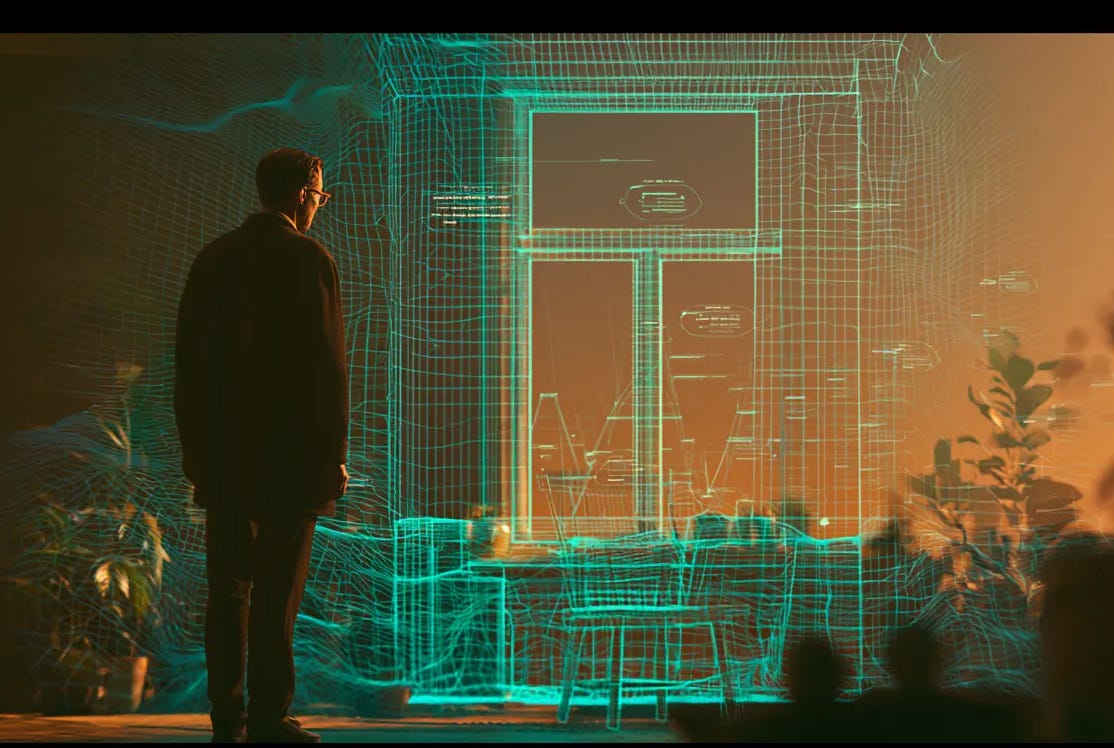
“Spatial intelligence” lets machines understand objects, movement and three-dimensional space, powering capable robots, augmented reality and detailed digital twins. The obstacle is data: unlike text, reality has not yet been digitised at internet scale.
Video, robots and smart glasses could change that, continuously feeding world models with physical experience (arguably most impressive example is Niantic’s pivot from Pokemon Go to real world AI, thanks to the users who gave them their data).
The result may be a “mirrorworld” in which places and objects become searchable, simulatable and machine-readable. The prize is enormous, from robotics to filmmaking. The catch is equally large: ubiquitous cameras require unprecedented public trust.
The So What: The LLM era was amassing a large amount of data - this suggests that we haven’t seen anything yet.
3. Apple - the dark horse of the AI race
Apple - the trillion dollar powerhouse defining our personal tech lifestyle hasn’t really been a player in the AI race; if anything, mocked for the abysmal state of the Siri AI agent that doesn’t seem to have evolved in the last five years. However, there’s an interesting counter narrative, which is that as small models get more effective and efficient, people are going to be switching to hosting AI locally. It’s already happened with the Mac mini being the tool of choice for many who are starting to host their own models.
This article takes that further and talks about the tension that they may have with doubling down on that market, which could be the next mobile equivalent to come out, but they will be competing for parts with their main cash cow, the iPhone. A bunch of other companies are now coming into this market with desktop personal, secure AI hardware - is Apple going to make the move or stay on the sidelines and miss this next wave?
A 256GB Mac Studio could give small firms private, capable AI, almost free, and at a lower price than NVIDIA’s rival hardware. But each machine consumes scarce RAM that could instead go into more profitable iPhones. The company may be repeating an old mistake: creating a market, then letting someone else own it.
The So What: One of the most interesting scenarios right now is whether distributed AI is going to take off.
4. Case study of AI in an aged care home
George Gouzounis’s newsletter has a rich case study of AI adoption in a single-site facility in South Australia and it’s worth a read. St Anna’s in Adelaide has no corporate office, no IT department and a couple of people on quality - so a fairly typical single-site story, and normally not where you’d expect cutting edge AI.

Its set up is, however, fairly advanced. For two years it has run AI over its own clinical records, inside its own Microsoft tenant, so nothing leaves the building. The numbers are informative. A compliance response that took one or two staff five days now takes roughly half an hour. Reviewing three months of complaints, once a four-hour job before analysis even began, is automated. Staff query 400 policy documents in plain English. Robots clean 800 square metres of corridor. It also found a gap in lifestyle assessments that nobody inside had spotted.
The So What: You don’t need an IT department to be a leader in AI implementation.
Bonus of the week: Poo & peanuts
Given I’m spending a lot of my time looking at bathroom innovations I’m finding multiple cool stories, this one hit home given a relative is very allergic to peanuts. It seems that faecal treatments may hold promise in addressing hard-to-treat food allergies. Is there no limit to the gifts that the gut keeps giving?
That’s all for now, happy weekend, everyone. Sayonara!
- Stephen