
Welcome to this week’s Four For Friday. Four topical stories on systems change, healthspan and AI for impact. Enjoy!

1. Demystifying the microbiome
A NYT deep dive into understanding the dark matter of our bodies - our microbiome. Two former MIT postdocs, Mathilde Poyet and Mathieu Groussin, spent a decade doing what microbiome science mostly hasn’t: sampling beyond the wealthy, Western and white populations that dominate the field.
Their Global Microbiome Conservancy now holds one of the world’s largest live-bacteria biobanks, chilled to minus-112 degrees. The findings could force a reckoning: a model predicting health from gut flora in rich countries fails completely everywhere else. Gut bacteria swap up to 100 genes a year, and industrialised guts run noisier, thinner and more inflamed. Even healthy Western microbiomes can resemble sick ones elsewhere.

The general thrust of this work echoes a good NPR piece I listened to this week, which says we still don’t really know what makes up a healthy gut microbiome, and cautions against consumers spending money on gut biome tests.
The So What: The gut-health boom is selling maps of a continent nobody has explored.
2. From ‘impact measurement’ to ‘systems intelligence’
The TransCap Initiative wants to bury a tired phrase. In its new framing, systemic investors should stop “measuring impact” and start cultivating “system intelligence”: a standing organisational function, like finance, built from information flows plus deliberate sensemaking.
This frame lays out eight interlocking components, from strategy and capital allocation to the messy relations between people. It involves retiring “beneficiaries” in favour of “system actors” who help interpret the data, not just supply it.
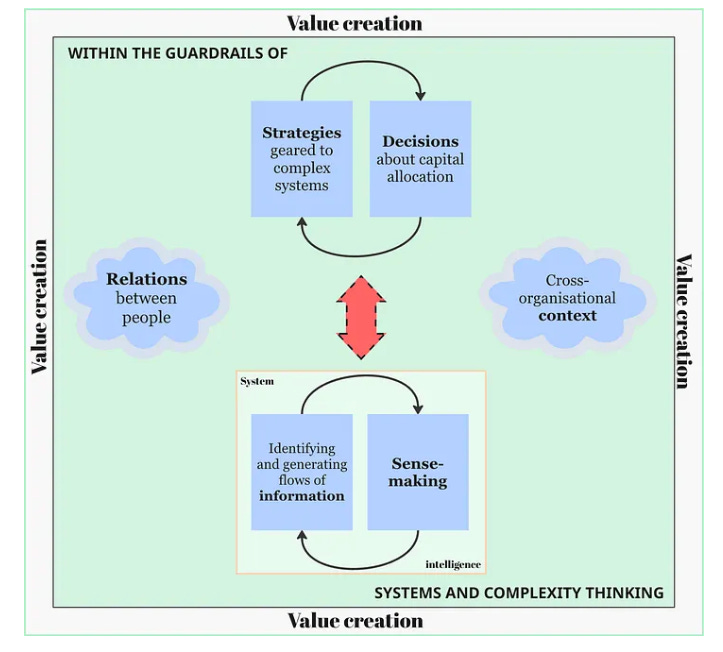
It’s a preliminary sketch with a fuller report promised later this year.
The So What: Better to measure what you can change than change what you can measure.
3. AI lessons from Nokia
I always find discussions of how and why Nokia failed fascinating - not only was it one of the most dramatic reversals of fortune, it’s one I witnessed first-hand, having worked there during the bull run up until the iPhone came out and for a couple of years as the air was being let out of the tyres. Working in innovation during that process taught me valuable lessons in humility - as well as about corporate inertia.
But Howard Yu’s point is updated for today’s AI age. In 2008 Symbian was still the world leader, but a single code change took 48 hours to compile and the full build up to two weeks. The processes were broken and a quality improvement feedback loop hardly existed. Google’s Android on the other hand managed comparable builds in under 20 minutes.
The echo today: bolting AI onto broken processes merely accelerates the bottleneck elsewhere. Obliterate complexity, Yu argues, don’t pave it faster.
The So What: Ensure that reinventing processes is part of any AI transformation, or you’ll just paper over the cracks.
4. Data sovereignty now comes with a scorecard
Brussels has made “cloud sovereignty” measurable.
In June the Commission detailed the Cloud Sovereignty framework behind April’s €180m tender, which grades providers across 48 criteria into tiers (‘SEAL’). The revealing result: Thales-Google venture S3NS managed only SEAL-2, since the US CLOUD Act bars any American-linked provider from proving supply-chain independence.

Server location is irrelevant; legal jurisdiction is everything. US hyperscalers still hold over 70% of the EU market against Europe’s 15%, yet sovereign spending jumped 83% year-on-year, ahead of any mandate. The proposed Cloud and AI Development Act (CADA) would extend this logic across all 27 states by 2028. Analysts reckon closing the gap needs €120bn by 2035.
The So What: Geography was never the point. Jurisdiction is, and no data centre in Frankfurt fixes American law.
Book of the Week: How to End War and Disease
This disarmingly simple book is as ambitious as it is original.
In case the cheery explainer video leaves you none the wiser, what Mike Sinn is proposing to do is co-opt capitalism for good. And rather than stop there like most people do, garnering nods but little action, he (or rather the other-worldly, and long-suffering AI intelligence that narrates the book) lays out the precise mechanism for how it could happen: pass a global treaty to shift 1% (initially) of ‘murder budgets’ (i.e. defence spending) to medical research instead.
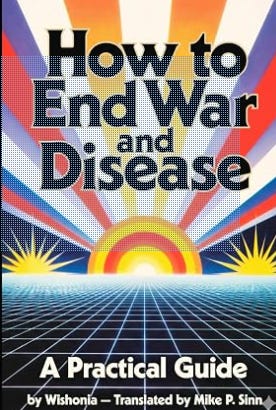
And a precisely capped 20% of that multi-hundred billion dollar windfall would go back to richly funding the politician and bond-holders who got this treaty passed, while 80% goes to medical research. This is using the lobbying systems and bribery for good, because that’s what works. Change the incentives, and people doing bad stuff today end up wanting to do good stuff.
The book suggests that research happens via a decentralized FDA, following the footsteps of the Oxford RECOVERY trial, that delivered breakthrough medical research for around £500/head, a fraction of what traditional, slow moving, and relatively ineffective trials cost today.
If 1% of the ideas in this book get implemented, the world will be a much better place.
That’s all for now, happy weekend, everyone.
- Stephen