

Welcome to this week’s Four For Friday. Four topical stories focused on healthspan, systems change and AI for impact. Enjoy!
Btw - just finishing up a hectic but enjoyable week in Tokyo and Seoul, and writing this from a spotless Shanghai airport on the return leg, hence the delayed send.

1. The health bill for hormone-disrupting chemicals: $1.1 trillion/yr
In another example of corporations not paying the true societal cost of their products, a new UN / WHO report suggests that endocrine-disrupting chemicals (EDCs) that we’re exposed to - it seems in almost everything - cause an estimated $1.1 trillion of healthcare costs.
To be fair, a lot of the downstream health effects of these chemicals are only now being fully understood. But expect a familiar blizzard of bluff, denials and stonewalling that happens when most vested interests - and excess profits - face a reckoning from their externalities.
The So What: We need greater collaboration and international alignment to overcome the current fragmentation and weak regulatory enforcement.
2. Agent Orange and Parkinson’s among Vietnam vets
On a similar theme - a fairly common topic in the Looking Forward newsletters - is Parkinson’s and pesticides. Half a century after Agent Orange was used in Vietnam to strip the trees and uncover enemy positions, the bill is still landing.
A study of nearly 4.5m Vietnam-era veterans in US Dept of Veterans Affairs records, followed for an average of 12.5 years, finds that the 23% who reported Agent Orange exposure were 44% more likely to be diagnosed with Parkinson disease.
Their risk of REM sleep behaviour disorder, often an early warning sign, rose by 78%, and dementia with Lewy bodies by 66%. Those who handled or sprayed the chemical fared worst: their Parkinson’s risk nearly doubled (HR 1.99).
The links held after adjusting for brain injury, frailty and how much healthcare veterans used. Between 1962 and 1971 America sprayed at least 75m litres of defoliant. An accompanying editorial’s title sums it up: the war ended, the exposure did not.
The So What: Environmental toxins burn on decades-long fuses; healthspan policy must count exposures, not just lifestyles.
3. Five truths we can no longer ignore
The current wealth disparities are not like they were in the famed Gilded Age at the beginning of the 20th century. In fact, it’s three times worse - see below. This punchy note from Katie and Brian Boland says we’ve been believing three myths, and now need to face five uncomfortable truths. First, the myths.
Impact investing can deliver a better world while earning returns for investors.
Win-win is a thing.
The Paris Agreement to keep to 1.5 °C of warming is realistic. Now experts are predicting 2 °C in the 2040s at today’s pace, and up to 3 °C by 2100.
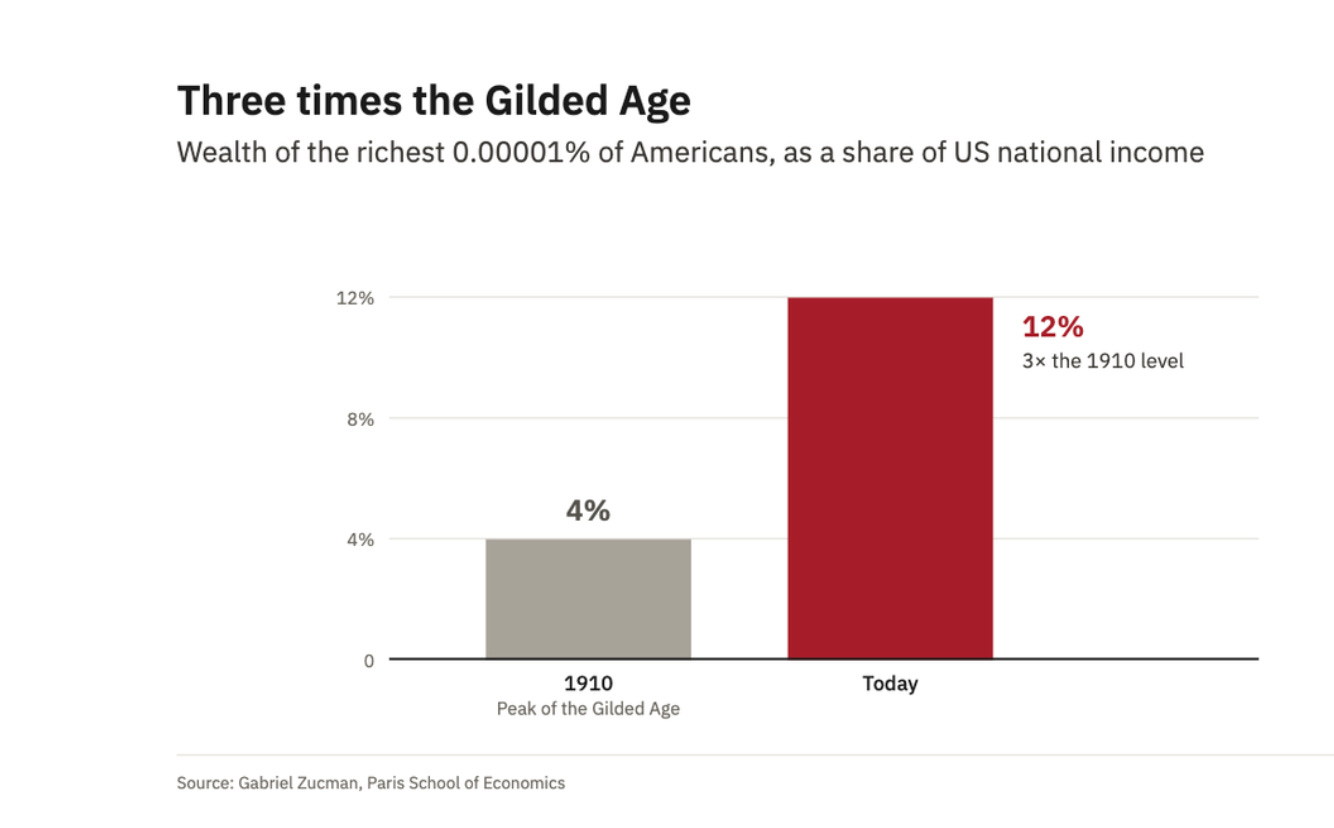
They point out we need to face these uncomfortable truths - our planet is heading for 2+ degrees warming (and that will bring chaos and heat deaths), extreme inequality will likely end in violence (it generally does), AI is making it worse, modern philanthropy is failing to deliver security or systems change, and anything other than massive change is doomed to fail.
The test is to follow the money. The largest US ESG funds hold much the same top names as the S&P 500, and US private foundations granted about $105bn in 2024 while holding $1.64tn. In their view, what an endowment owns shapes the world more than what it funds. They urge foundations to align their investments with their charitable aims, and point to employee-owned businesses, community lenders and community-owned housing.
The So What: Philanthropists should put the other 95% of their capital to work on the problems their grants aim to solve.
4. McKinsey on how to boost the rural healthcare economy
The lack of rural health workers is a global issue - as relevant here in Australia as the US, and Japan - and this McKinsey report suggests a potentially interesting solution: ‘bridge workers’.
America is short some 400,000 nurses and allied health workers. More than 100 rural hospitals have shut in a decade, leaving four million people without timely care. Yet McKinsey counts 38m “bridge workers”, underemployed adults earning a median $28,000, who could fill those roles nearly 100 times over. Converting just 1% would close the gap and add $340bn in lifetime earnings, $28bn of it rural.
The will is there: 58% would consider the switch, but most can’t afford to retrain. This could be where the $50bn (!) Rural Health Transformation Program fits in - it’s got a five-year window to allocate this cash and could conceivably be the catalyst to make this happen.
The So What: The workers rural hospitals need already live next door; they just cannot afford to train.
+ Bonus: Restaurant Recommendation, Seoul
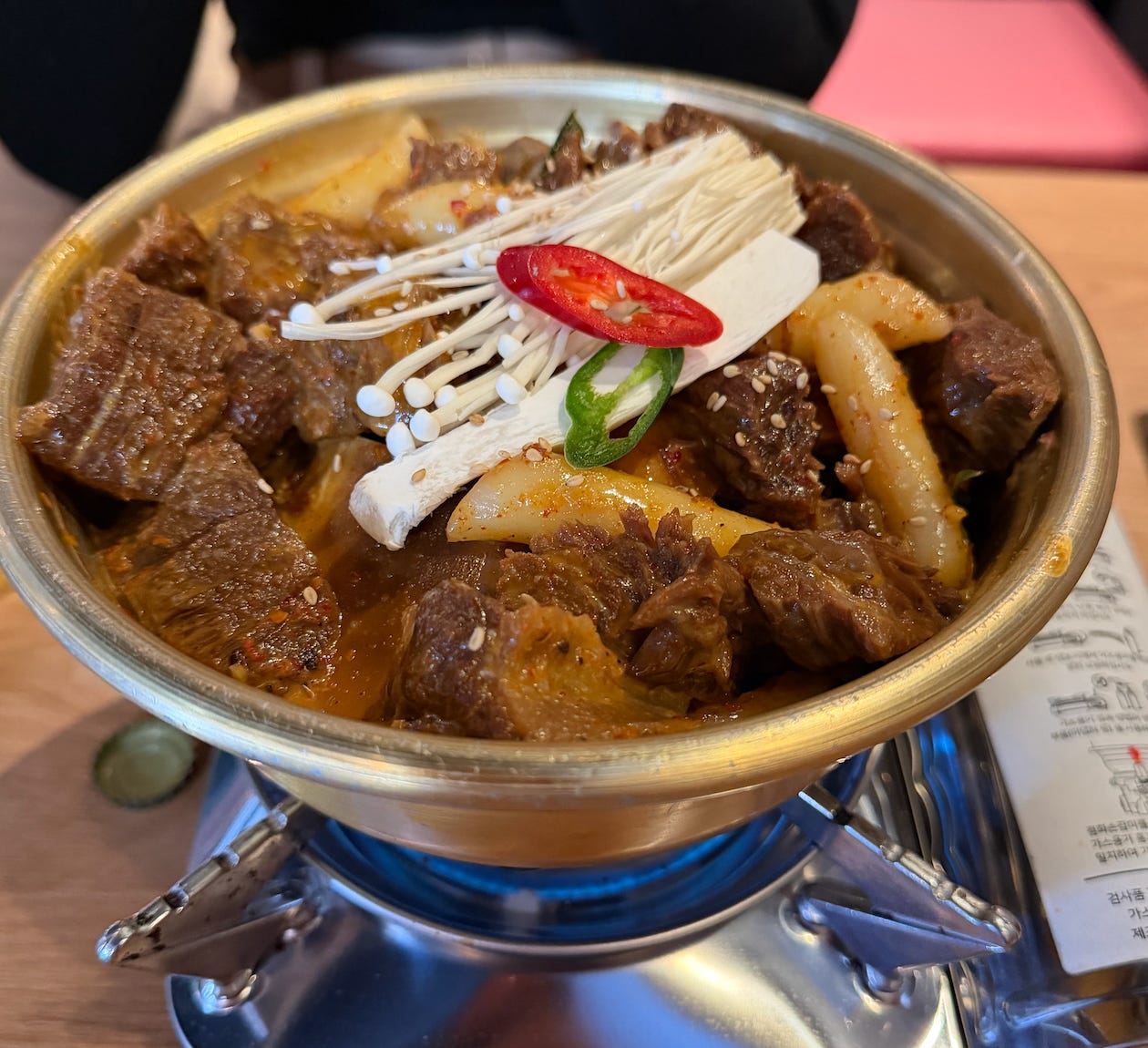
If you think Korean food is just kimchi and barbecue, then go to Sossin Isso - an delicious, affordable friendly, spot next time you’re in Seoul, and have the creamy short ribs. There are only two things on the menu - short ribs, creamy or spicy. For $20 per person including drinks you leave this cosy, friendly spot rolling in good spirits. It’s on my shortlist, and worth waiting in line for (no reservations).
That’s all for now. Have a happy, safe rest-of weekend, everyone.
Stephen